South African Youth Discover New Possibilities on China Leadership Exchange
BEIJING/CHANGSHA – For a group of young South Africans, a week in China became more than a visit to another country. It offered an opportunity to see how innovation, technology, entrepreneurship and youth participation are shaping the country’s development.
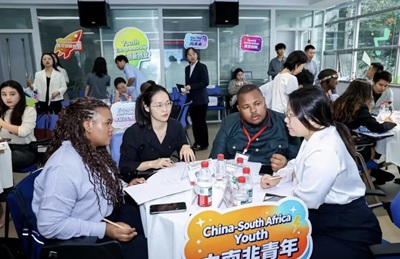
The China-SA Youth Leadership Exchange Camp recently concluded after bringing young people from South Africa and China together to discuss the role of youth in national development and modernisation.Held under the theme “Youth Leadership & National Modernization,” the week-long programme gave participants an opportunity to exchange ideas, learn from each other’s experiences and explore aspects of China’s development journey.
The South African participants visited Beijing and Changsha, where they were introduced to different aspects of China’s social and economic development.For some of the young South Africans, what stood out was the practical use of technology in everyday life and the way innovation is being applied to challenges facing communities.Agricultural technology was among the areas that attracted attention. The participants were exposed to China’s use of technology and innovation in agriculture, offering a glimpse into how modern farming can be supported by digital tools and new approaches.
The experience also highlighted the growing role of digital applications in people’s daily lives and in business.For young people interested in entrepreneurship, the exchange provided an opportunity to see how technology can create new pathways for businesses and employment.But the programme was not only about observing China.
The discussions between South African and Chinese youth were an important part of the exchange, allowing participants to share their own experiences and consider the challenges facing young people in their respective countries.Youth unemployment, access to opportunities, entrepreneurship, education, technology and leadership are issues that affect young people across borders, even though the circumstances in each country are different.
The exchange therefore created a space for young people to ask questions, compare experiences and think about how they can contribute to development in their own communities.The experience comes at a time when relations between South Africa and China continue to include increasing cooperation in areas such as education, trade, technology and people-to-people exchanges.
Youth exchanges offer another dimension to that relationship by allowing young people to build relationships directly rather than learning about each other’s countries only through institutions or official programmes.The South African participants’ interest in China’s agricultural technology, digital innovation and youth entrepreneurship also points to areas where further exchanges could take place.
More programmes involving young entrepreneurs, students, technology enthusiasts, farmers and community leaders could give participants opportunities to share practical knowledge and develop networks across the two countries.For the young people who took part in the camp, the journey to Beijing and Changsha was ultimately about taking ideas home.
Seeing how another country approaches modernisation does not mean simply copying its experience. Instead, it can encourage young people to ask what lessons may be relevant to their own communities and what innovations could be adapted to local circumstances.The camp also reinforced the importance of young people being included in conversations about the future.
As South Africa and China continue to strengthen people-to-people links, youth exchanges can provide a foundation for friendships, partnerships and new ideas that extend beyond the duration of a single programme.The hope is that the conversations started during the week-long camp will continue long after the participants have returned home – through further exchanges, business connections, educational opportunities and collaborative projects.
For the young participants, China was not simply a destination. It became a classroom where they could observe, question and exchange ideas about what leadership and modernisation can mean for the next generation.