
China’s Zero-Tariff Policy Opens New Doors for South African Businesses
South African exporters are being encouraged to take advantage of duty-free access to the Chinese market, with government hoping the initiative will boost local production, investment and job creation.
By Thembi Moyo
South African businesses have been urged to take advantage of China’s zero-tariff policy, which allows eligible products from African countries to enter the Chinese market without customs duties.
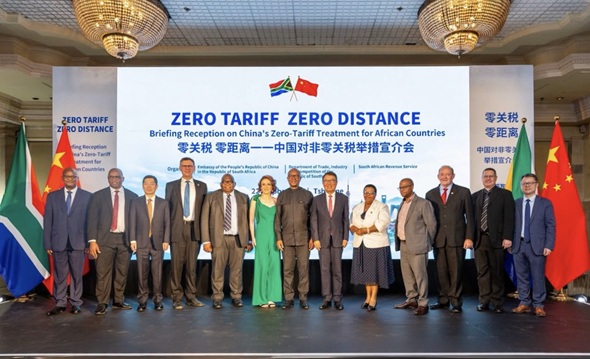
Speaking at a briefing reception in Pretoria on 22 October, Minister of Trade, Industry and Competition Parks Tau said the initiative presented an opportunity for South African companies to expand their markets, increase exports and create jobs. The event, held in partnership with the Chinese Embassy and the South African Revenue Service (SARS), brought together government officials, business leaders, exporters and entrepreneurs to explain how the policy works and how local businesses can benefit.
China introduced the zero-tariff treatment on 1 May 2026 for 53 African countries with which it maintains diplomatic relations. The arrangement covers eligible products, subject to specific exceptions and tariff-rate quotas, and is scheduled to run until 30 April 2028. Tau said South Africa wanted to use the opportunity to move beyond exporting mainly raw materials towards producing and selling more value-added goods. He pointed to opportunities in agro-processing, beverages, chemicals, pharmaceuticals, cosmetics, machinery, medical equipment, automotive products and other manufactured goods. “Not only more trade, but more factories, more processing and more jobs here at home,” was the central message of his address.
Tau said South Africa and China were also working towards a longer-term trade arrangement through negotiations involving the Southern African Customs Union (SACU). The aim is to provide businesses with greater certainty beyond the current zero-tariff period while protecting local industries and employment. Chinese Ambassador Wu Peng said the policy was already contributing to stronger trade relations between the two countries.
According to figures he presented, trade between China and South Africa reached nearly US$15 billion between May and August 2026, representing an increase of almost 24% compared with the same period last year. South African agricultural exports to China also recorded growth, reaching nearly US$500 million during those four months, an increase of more than 35% year-on-year.
Wu said the policy could help South African products reach more Chinese consumers while encouraging investment in local manufacturing and industrial development. He highlighted opportunities for agricultural producers, manufacturers and small businesses to explore the Chinese market. The South African Revenue Service was represented at the briefing by Interim Deputy Commissioner Schalk Human. SARS plays an important role in implementing the arrangement by issuing certificates of origin, which exporters need to demonstrate that their products qualify for preferential treatment.
According to Tau, SARS issued 25,975 certificates of origin between June and August, while customs declarations increased by 199% year-on-year. The government is also expanding export-promotion activities through trade fairs, business missions and direct engagements between South African companies and Chinese buyers.
Tau encouraged exporters to participate in the upcoming China–Africa Economic and Trade Expo South Africa Session, scheduled for 19 to 21 November at the Sandton Convention Centre. He urged businesses to obtain the necessary documentation, engage with officials about potential export opportunities and establish relationships with prospective buyers. With China being South Africa’s largest trading partner, the initiative offers businesses an opportunity to reach a major international market.
However, turning that opportunity into sustainable growth will depend on whether local companies can meet market requirements, expand production and compete effectively. For South African entrepreneurs, the challenge now is to turn duty-free access into increased sales, investment and employment.


