South Africa and China Deepen Science and Innovation Partnership
South Africa has called for stronger scientific and technological cooperation with China, saying countries in the Global South must play a leading role in shaping the technologies that will define the future.
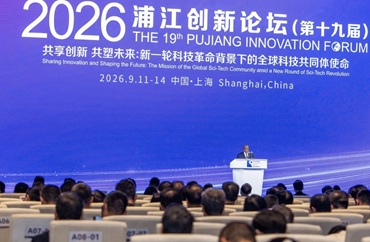
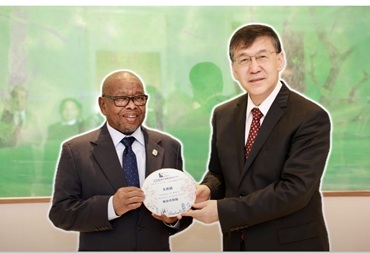
South Africa’s Minister of Science, Technology and Innovation, Professor Blade Nzimande, made the call while addressing the 19th Pujiang Innovation Forum in Shanghai, where South Africa was recognised as the Country of Honour. Nzimande said South Africa’s participation in the forum was an important reflection of the long-standing relationship between the two countries and their shared commitment to development, innovation and scientific cooperation.
The partnership between South Africa and China is guided by a Science and Technology Agreement signed in 1999. Since then, cooperation has expanded into areas including health, traditional medicine, space science and astronomy, forestry, palaeontology and energy research. The minister said the relationship comes at an important time as technologies such as artificial intelligence, quantum computing, biotechnology, space science, advanced materials and clean technologies rapidly reshape economies and societies.
He warned that the Global South could not afford to remain on the sidelines. “We must be co-creators of knowledge, co-designers of technology, and co-owners of the industries that will define the future,” Nzimande said. South Africa has already developed strong capabilities in astronomy and space science, with projects such as MeerKAT and the Square Kilometre Array demonstrating the continent’s ability to host and operate major scientific infrastructure.
Nzimande also highlighted cooperation between the South African National Space Agency and China’s national space agency, particularly in Earth observation, disaster management, ocean monitoring and data systems. Health innovation was another area highlighted by the minister. South African researchers have made significant contributions to genomics, epidemiology, vaccine science and medical technologies aimed at underserved communities.
He said the country’s experience during the Covid-19 pandemic had reinforced the importance of developing Africa’s own capacity to produce life-saving technologies, including vaccines and biologics. Looking ahead, South Africa is focusing on areas including the hydrogen economy, bioeconomy, energy and climate-change research, artificial intelligence, digital technologies and advanced manufacturing.
Nzimande said a major challenge remained turning scientific discoveries into successful businesses. Many innovators struggle to move from promising prototypes to commercial products because funding, markets and industrial demand are not always well connected. He pointed to initiatives such as InnoMatch as potential platforms for connecting start-ups with investors, multinational companies and buyers.The minister also called for stronger opportunities for young scientists through joint research programmes, laboratories, fellowships, mentorship and exchange programmes between South Africa and China.
He said science should not remain confined to laboratories and universities,but should become part of everyday society. South Africa is therefore working towards establishing a national network of science and technology centres to encourage young people to engage with science and innovation. Nzimande said South Africa and China would continue strengthening cooperation in artificial intelligence, space science, quantum computing, cybersecurity, youth development and open science.
He concluded by saying South Africa was ready to work with China and other international partners to build a future where innovation is shared, technology is used responsibly and science serves as a bridge between nations and generations.