
China–South Africa Ties Strengthened at Chinese New Year Celebration in Johannesburg
By Thembi Moyo
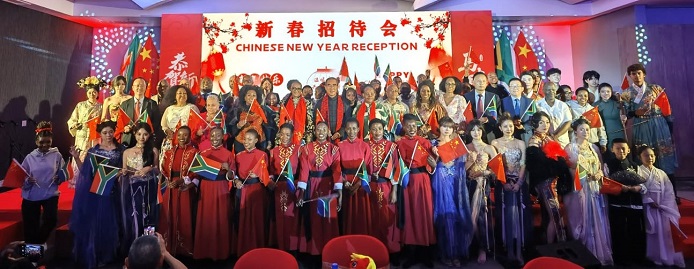
Diplomatic warmth, cultural pride and a shared vision for development filled the room in Johannesburg 9 February 2026 as leaders from China and South Africa gathered to celebrate the 2026 Chinese Lunar New Yearushering in the Year of the Horse with messages of unity, cooperation and people-to-people exchange.
The reception brought together a wide range of dignitaries, including Gauteng Provincial Legislature Speaker Morakane Mosupyoe, MECs and Deputy Speakers from Gauteng and the Free State, as well as mayors and speakers from Johannesburg, Ekurhuleni, Mangaung and Maluti-A-Phofung. Members of Parliament and provincial legislatures, representatives from political parties, business, media, academia and civil society, members of the Consular Corps, and leaders of Chinese enterprises and community organisations were also in attendance.
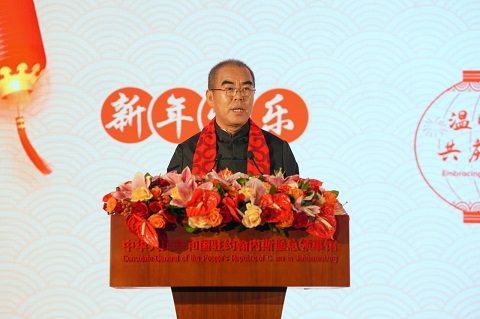
At the centre of the celebration was Chinese Consul General in Johannesburg, Mr Pan Qingjiang, who used the occasion to reflect on both tradition and the growing partnership between China and South Africa. “The Chinese New Year, also known as the Spring Festival, carries the philosophy of peace, amity and harmony,” Pan said. “Through today’s celebration, we hope our Chinese compatriots feel at home, while our South African friends experience the richness of Chinese culture. Such exchanges promote mutual understanding and friendship.”
Describing the Year of the Horse as a symbol of strength, perseverance and determination to forge ahead, Pan linked the festive message to China’s continued development and its global outlook. “China is committed to providing new opportunities for the world through its momentous development,” he said, stressing that global solidarity was essential at a time of growing uncertainty. “History has proven that division and confrontation lead nowhere.”
Pan highlighted the steady progress in China–South Africa relations, noting deeper political trust, expanding economic cooperation and stronger cultural links under the guidance of the two nations’ presidents. A major milestone, he said, was the recent China–Africa Economic Partnership Agreement, which is expected to give South African exports duty-free access to the Chinese market while encouraging increased investment into South Africa.
“We look forward to an early harvest of its implementation,” Pan said. “Robust trade ties and industrial cooperation will help revitalize growth and deliver more benefits to the people.” He also pointed to rising sub-national cooperation, particularly with Gauteng and the Free State, where exchanges in trade, education, culture and community development are gaining momentum.
Gauteng Provincial Legislature Speaker Morakane Mosupyoe echoed the message of partnership, describing the celebration as more than a cultural event. “This occasion also marks the 2026 China–Africa Year of People-to-People Exchanges,” Mosupyoe said. “We must take advantage of this opportunity to strengthen China–Africa relations in many areas.”
She said Gauteng had already built strong links with Chinese counterparts through delegations and cooperation agreements that are now being implemented. “Our attendance of this celebration today is a clear demonstration of our full commitment to promoting the relations and cooperations between China and Gauteng,” she said. “We commit to ensuring that channels of negotiations remain open for further strategic cooperative partnerships with China.”
Mosupyoe added that cultural celebrations like the Lunar New Year play an important role in bringing nations together. “As Gauteng Province, we shall be joining in these celebrations with the aim of promoting the spirit of togetherness and shared destiny as a people,” she said. Free State MEC for Sport, Arts, Culture and Recreation Ntombizanele Sifuba placed strong emphasis on the cultural and historical ties linking China, Africa and the broader Global South.
“The historical umbilical cord that connects the People’s Republic of China and those of us in the Global South remains solid and can never be severed,” Sifuba said, linking shared histories of struggle for sovereignty and independence. She described the Chinese New Year as a powerful expression of cultural pride and identity, drawing parallels with African traditions such as the Basotho New Year.
“As we strengthen relations with our Chinese compatriots, we must extend invitations to share in each other’s cultural milestones,” she said. Sifuba proposed deeper collaboration through major Free State cultural platforms such as the Mangaung African Cultural Festival (MACUFE), suggesting that future festivals could showcase Chinese cultural performances alongside African heritage.
“It would be a beauty and a spectacle to see Chinese zodiac symbols, tang suits, cheongsam and dragon dances paraded in the streets of Mangaung,” she said. She also highlighted potential partnerships in sport and infrastructure development, noting China’s global sporting achievements and technical expertise.
The evening’s messages made it clear that the Lunar New Year celebration was not only about tradition, but also about shaping a shared future. “As the world becomes more volatile and peace and development face serious challenges, global solidarity is the only right choice,” Pan said.
With 2026 designated as the China–Africa Year of People-to-People Exchanges, leaders expressed hope that cultural, economic and diplomatic ties would continue to deepen ensuring that the friendship between China and South Africa remains as strong and forward-moving as the spirit of the Horse.
Chinese Consul General in Johannesburg, Pan Qingjiang


