Xi, Lee Pledge Closer China–ROK Ties and Regional Cooperation at Gyeongju Summit
November 1, 2025 | Gyeongju, South Korea,Chinese President Xi Jinping and South Korean President Lee Jae Myung held high-level talks on Friday at the Gyeongju National Museum, pledging to deepen cooperation and strengthen mutual trust between their countries as they navigate a rapidly changing regional and global landscape.
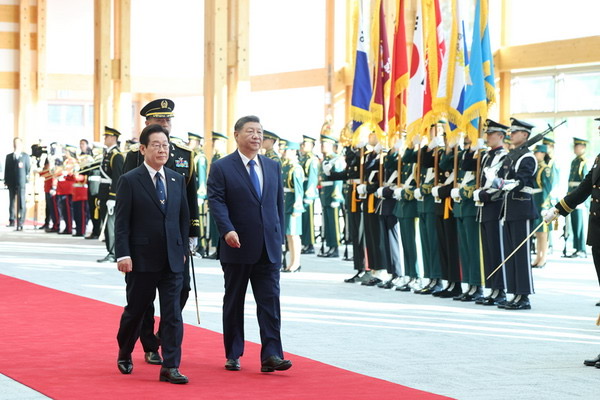
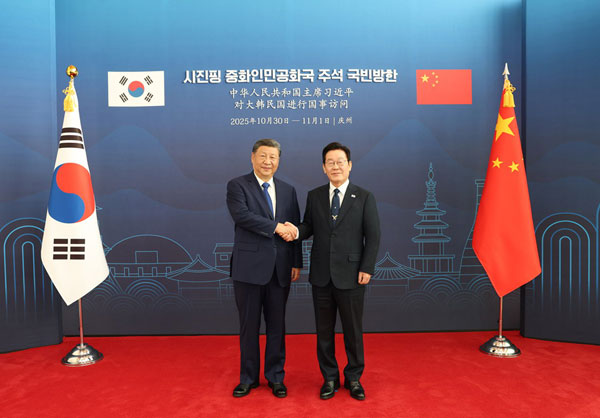
Amid Gyeongju’s autumn splendor, Xi was welcomed by a Republic of Korea (ROK) guard of honor. The two leaders exchanged warm handshakes and greetings before reviewing the troops as national anthems filled the air a ceremonial start to the first state visit by a Chinese president to South Korea in 11 years. During their talks, Xi underscored that China and the ROK are “close neighbors that cannot be moved away, and cooperation partners that cannot be separated.” Reflecting on the 33 years of diplomatic relations between the two nations, he said both sides have transcended ideological differences to achieve “mutual success and common prosperity.”
Xi reaffirmed that China values its relationship with South Korea and remains committed to maintaining “continuity and stability” in its policies toward Seoul. He called for enhanced communication and cooperation to inject “positive energy into regional peace and development.” President Xi outlined four key proposals for strengthening China–ROK ties. First, he called for greater strategic communication and mutual respect, urging both sides to handle differences “through friendly consultation” and to use existing dialogue mechanisms to build trust.
Second, he proposed deepening mutually beneficial cooperation, especially in emerging industries such as artificial intelligence, biomedicine, green energy, and the silver economy. Xi also emphasized joint efforts to combat online gambling and telecom fraud, describing them as shared security concerns. Third, he encouraged stronger people-to-people exchanges, urging the two countries to foster positive public perceptions through media, youth, and cultural initiatives. “The two sides should bring their hearts closer together,” he said, advocating more exchanges among youth, think tanks, and subnational actors to strengthen friendship between the peoples.
Fourth, Xi called for enhanced coordination in multilateral fora, pledging that China, as the next APEC host, would work with South Korea to promote regional economic integration and build an “Asia-Pacific community with a shared future.” Xi also briefed his counterpart on the outcomes of the Fourth Plenary Session of the 20th CPC Central Committee, which adopted recommendations for China’s 15th Five-Year Plan. He said China’s economy remains “resilient and full of potential,” and reaffirmed Beijing’s commitment to expanding high-standard opening-up and sharing opportunities with all nations.
President Lee Jae Myung praised Xi’s visit as “historic and highly significant,” emphasizing that China and South Korea are “not only neighbors but inseparable partners.” He expressed Seoul’s readiness to enhance cooperation in trade, technology, and supply chain stability, while promoting exchanges between political parties, local governments, and citizens. Lee also voiced support for China’s upcoming 2026 APEC Economic Leaders’ Meeting and pledged to strengthen coordination in regional and international affairs “to jointly promote peace and development.”
Following the talks, the two leaders witnessed the signing of several cooperation agreements in areas including trade, finance, agriculture, law enforcement, and science and technology. In the evening, President Lee hosted a welcoming banquet in honor of Xi and his delegation, which included senior Chinese officials Cai Qi and Wang Yi. The meeting marked a renewed momentum in China–ROK relations, with both leaders signaling a shared determination to turn mutual trust and partnership into concrete progress for their nations and the wider Asia-Pacific region.