What South Africa Can Learn from China’s Long-Term Planning Approach
By Thembi Moyo
JOHANNESBURG – South Africa’s efforts to strengthen long-term national planning could benefit from lessons emerging from China’s experience of using five-year development plans to guide economic and social transformation.
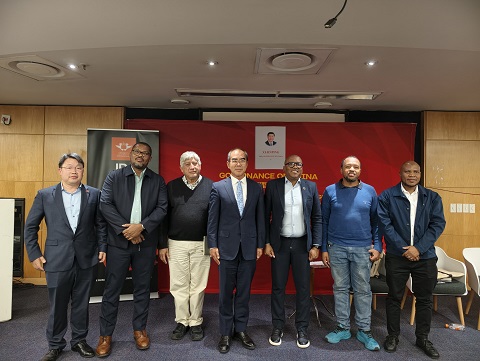
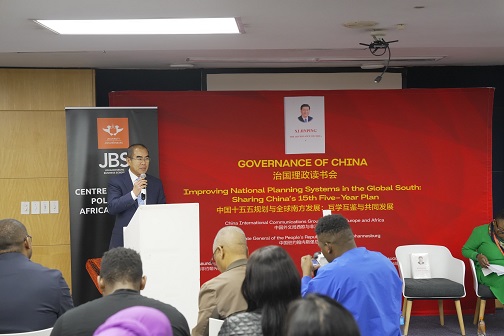
This was one of the key messages at a seminar on Xi Jinping: Governance of China held at the University of Johannesburg on Friday, where government officials, academics, students and representatives from China gathered to discuss how planning and governance can contribute to development.Speaking at the seminar, Pan Qingjiang, Consul General of China in Johannesburg, highlighted China’s 15th Five-Year Plan as an example of how long-term planning can be linked to public participation, policy coordination and implementation.
The discussion was particularly relevant to South Africa, which has its own National Planning System aimed at ensuring that government policies and programmes are guided by long-term development priorities.Pan said China’s experience showed that development planning was not simply about producing documents, but about creating a clear direction and ensuring that plans were translated into action.
He identified four key principles behind China’s approach: scientific decision-making, strategic coordination, holistic planning and effective implementation.According to Pan, China combines national-level planning with consultation with communities, experts, businesses and other sectors of society. The 15th Five-Year Plan was developed through research and public consultation, including the use of online platforms to gather views from different groups.
The approach, he said, was intended to ensure that national priorities remained connected to the practical needs of ordinary people.For South Africa, where government faces the ongoing challenge of translating national policies into improvements in people’s daily lives, the emphasis on connecting planning with implementation is particularly important.Pan also pointed to the importance of continuity. China has implemented 14 five-year plans since the first was introduced in 1953, with each plan building on the previous one while responding to new economic and social challenges.
He argued that long-term planning allowed China to pursue major development goals while breaking them down into manageable stages.The 15th Five-Year Plan forms part of China’s longer-term ambition to basically achieve socialist modernisation by 2035. Rather than treating each five-year period as an isolated programme, the plans are designed to connect different stages of national development.Pan said this continuity had helped China move from building an independent industrial base to becoming one of the world’s major manufacturing powers.Another lesson highlighted at the seminar was the need to balance domestic priorities with international cooperation.
China’s current plan places strong emphasis on technological innovation, modernising industries, green development and strengthening the domestic economy, while also maintaining an outward-looking approach to trade and international cooperation.Pan said China believed its development experience could provide opportunities for dialogue with African countries rather than being presented as a model to be copied.He stressed the importance of China and Africa learning from each other as both regions pursue modernisation.
For South Africa, the discussion comes at a time when questions around effective planning, policy coordination and implementation remain central to the country’s development agenda.The seminar therefore provided an opportunity to look beyond differences between the two countries and consider practical questions how can long-term plans remain consistent when governments face changing circumstances? How can citizens have a meaningful role in shaping national priorities? And, most importantly, how can plans on paper translate into better jobs, services and opportunities?
Pan’s message was that successful planning requires more than ambitious targets. It needs strong coordination, clear responsibilities, monitoring and the ability to adjust when circumstances change. He also emphasised that implementation was ultimately the measure of any development plan.The seminar brought these issues into a South African context, opening space for discussion about how experiences from China and other countries can contribute to conversations about strengthening South Africa’s own planning system. As both South Africa and China pursue their respective development goals, the exchange highlighted the potential value of continued dialogue between the two countries on governance, planning and development.
The central lesson from China’s 15th Five-Year Plan was clear: long-term development requires a consistent vision, but that vision must be supported by public participation, effective institutions and determined implementation if it is to make a meaningful difference in people’s lives.