UJ and Government Forge Bold Partnership to Drive Inclusive Digital Transformation in Africa
By Thembi Moyo
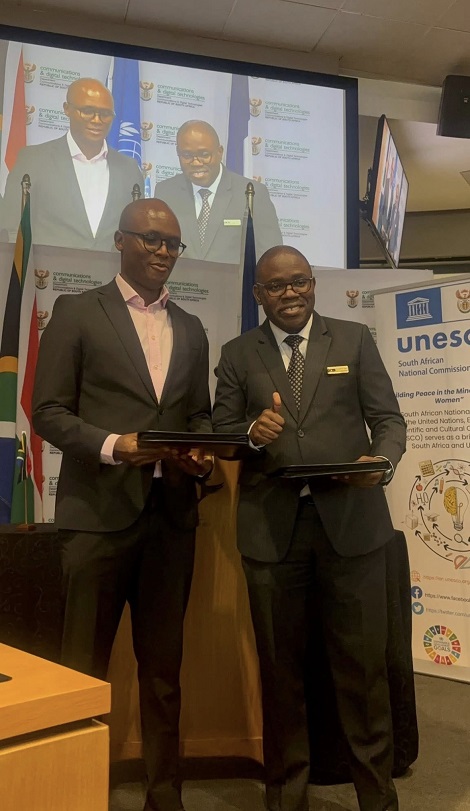
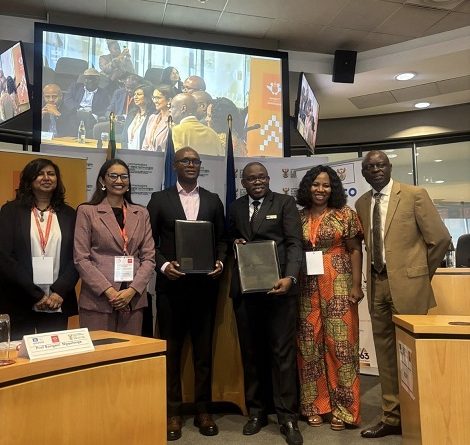
Johannesburg — The University of Johannesburg (UJ) has taken a major step in advancing Africa’s digital future, hosting the Minister of Communications and Digital Technologies, Solly Malatsi, for the official signing of a strategic partnership linked to its newly awarded UNESCO Chair in Cultural Inclusivity and Equity in Digital Media in Africa.
The event brought together government officials, academics, media representatives and international partners to mark what stakeholders described as a milestone moment for South Africa’s digital agenda and the continent’s broader transformation efforts. At the centre of the collaboration is UJ’s UNESCO Chair, led by Professor Prinola Govenden in the Faculty of Humanities. The Chair was selected through a highly competitive global process, with only a small number of institutions chosen from 135 applications submitted to UNESCO headquarters in Paris. It will run over four years and aims to address the inequalities and imbalances shaping Africa’s digital landscape.
UJ Vice-Chancellor and Principal, Professor Letlhokwa Mpedi, said the partnership signals a shift toward more impactful collaboration between academia and government. “Today marks an important moment for this university and for the country. This partnership will help strengthen digital transformation efforts, deepen cooperation, and ensure that innovation is aligned with the needs of our society,” said Mpedi.
He added that UJ’s work is rooted in making a tangible difference. “At UJ, everything we do must contribute positively to society. This collaboration reflects our commitment to producing research and solutions that matter, particularly in addressing inequality, unemployment and access to opportunities.” The UNESCO Chair will focus on five key areas, including understanding internet usage and cultural representation, improving digital access, strengthening internet governance, developing strategies to decolonise the internet, and exploring the impact of Fourth Industrial Revolution technologies in Africa.
Professor Prinola Govenden highlighted that the initiative is not just an academic exercise, but a platform for real change. “We are honoured to partner with the Minister and his team. This collaboration has been built over time, and what stands out is the shared sense of purpose,” she said. “We want to ensure that Africa is not defined by a single narrative in the digital space. Our work will centre African experiences, languages and knowledge systems, while also building practical solutions that can influence policy and development.”
Govenden also proposed that the partnership move quickly into implementation, including a possible national baseline study on digital cultural inclusion that could later be expanded across the continent. Minister Malatsi acknowledged South Africa’s progress in expanding connectivity, noting that mobile network coverage now reaches the vast majority of the population. However, he emphasised that access alone is not enough. “Connectivity on its own does not guarantee meaningful participation. If people cannot afford data, do not have the right devices, or lack the necessary skills, then we have not achieved true inclusion,” he said.
He stressed the importance of ensuring that digital transformation reflects African realities. “Our languages, cultures and knowledge systems must be part of the digital ecosystem. If they are absent, then inclusion remains incomplete,” Malatsi said. The Minister also called for practical outcomes from the partnership. “We need solutions that go beyond theory ideas that can inform policy, guide implementation, and make a real difference in people’s lives.”
The collaboration aligns with UNESCO’s broader mission to promote cultural diversity, equitable access to information, and inclusive knowledge systems. It is also supported by international academic partners from countries including China, Canada and Nigeria, positioning the initiative as a global yet Africa-focused effort. Both UJ and the Department of Communications and Digital Technologies emphasised that the partnership would contribute to South Africa’s leadership role in digital diplomacy and continental cooperation, particularly within platforms such as the African Union and BRICS.
As discussions concluded, there was strong consensus that partnerships of this nature bringing together government, academia, industry and civil society are essential to building a digital future that is inclusive, practical and sustainable.