
MSF Calls on South Africa to Save Lives Through Urgent Gaza Medical Evacuations
By Thembi Moyo
Doctors Without Borders (MSF) has called on South Africa to urgently accept patients from Gaza who are in desperate need of medical evacuation, warning that thousands of lives hang in the balance as the territory’s health system collapses under continuous bombardment.
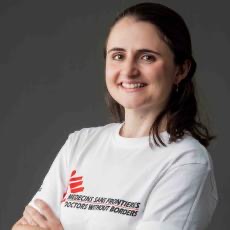
More than 15,600 people, including almost 4,000 children, are registered with the World Health Organization for evacuation many suffering from complex trauma injuries, cancer, kidney failure, and other life-threatening conditions. Yet, according to MSF, South Africa has not yet accepted a single patient, despite its strong moral stance at the International Court of Justice (ICJ) against the ongoing war in Gaza. “Hospitals that once formed the backbone of Gaza’s health system have been destroyed,” said Claire Waterhouse, Director of Advocacy and Analysis for MSF Southern Africa. “Patients are suffering and dying while waiting for the chance to be evacuated and treated. This is not just a medical emergency it is a humanitarian catastrophe.”
The once-functioning hospitals of Gaza have been reduced to rubble. MSF reports that medical facilities have been intentionally targeted, and over 1,700 health workers have been killed since October 2023, including 15 MSF staff. One of them, Dr. Mohammed Obeid, a respected orthopaedic surgeon who worked across several hospitals, was arrested by Israeli forces during a raid at Kamal Adwan Hospital in October 2024. His whereabouts remain unknown. “Our teams are still grieving colleagues lost to violence, yet they continue to work under fire,” Waterhouse said. “The people of Gaza are enduring unthinkable suffering without adequate medicine, equipment, or safe spaces to treat the injured.”
Between July 2024 and August 2025, at least 740 patients including 137 children died while waiting to be evacuated, deaths MSF describes as “preventable and caused by political inaction.” “These patients cannot wait for the healthcare system to be rebuilt,” said Dr. Javid Abdelmoneim, MSF’s International President. “They need urgent care today. Every delay is a death sentence.” Countries such as Egypt, Qatar, the UAE, Türkiye, and Jordan have already taken in thousands of patients. Egypt has received nearly 4,000, the UAE 1,499, Qatar 970, while Italy, Algeria, and Tunisia have also accepted smaller numbers. But South Africa, MSF says, has so far offered none.
“Given South Africa’s historic leadership on human rights and its moral voice at the ICJ, this is the moment to turn solidarity into action,” Waterhouse said. “Accepting even a small number of critically ill patients would send a powerful message of compassion and responsibility.” MSF is appealing to the South African government and Department of Health to fast-track visas and reduce administrative delays for patients and families, allow caregivers to accompany patients so they are not separated during treatment abroad, guarantee dignified living conditions and follow-up care including mental health support, and advocate for safe passage of medical convoys and caregivers through Israel.
“This is not about diverting South Africa’s medical resources,” Waterhouse emphasized. “It’s about sharing the responsibility during a genocide where silence and inaction cost lives.” Even during brief ceasefires, violence continues to claim lives. On 29 October, Israeli strikes killed more than 104 Palestinians, including 46 children and 20 women, within just 24 hours. MSF teams treated the wounded in overcrowded facilities such as Al-Aqsa Hospital, where emergency doctor Dr. Morten Rostrup described scenes of chaos and heartbreak as patients arrived with devastating injuries.
MSF acknowledges that South Africa’s own health system faces challenges but insists that exceptional crises require exceptional solidarity. “For the people of Gaza, medical evacuation is often the only lifeline left,” Waterhouse said. “It’s not about politicsit’s about saving lives. South Africa has stood for justice before. Now, it has a chance to stand for life.”


