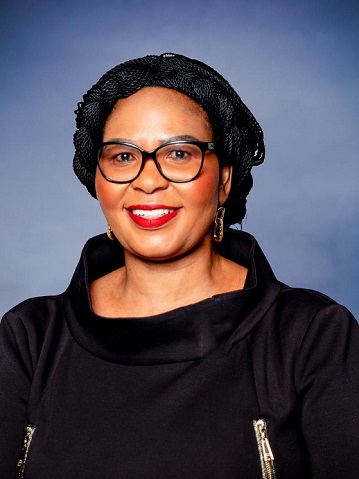
MEC Nkomo-Ralehoko Concludes Provincial NPO Roadshow with Renewed Commitment to Partnership, Accountability and Compliance
The Gauteng Department of Social Development (GDSD) has concluded its provincial Non-Profit Organisation (NPO) Roadshow in the Joburg Region, marking the end of a province-wide engagement aimed at strengthening the relationship between government and the NPO sector.
The roadshow provided the Department with an opportunity to engage directly with NPOs across Gauteng, listen to challenges affecting the sector, understand their experiences on the ground and consider proposals aimed at improving the delivery of social services to communities.The engagement has been conducted in other four regions of Gauteng.Throughout the engagements, NPOs raised a range of issues affecting their work, while also highlighting the important role they continue to play in supporting vulnerable individuals, families and communities.
Gauteng MEC for Social Development, Nomantu Nkomo-Ralehoko, said the roadshow should not be viewed as a once-off engagement, but as part of a broader effort to build a stronger and more constructive working relationship between the Department and the sector.“Over the past weeks, we have listened to NPOs across the province. We have heard your challenges, your proposals and your experiences on the ground. We have also seen and heard about the important work you continue to do in our communities, often under difficult circumstances. Our responsibility now is to take what we have heard and turn it into action,” said MEC Nkomo-Ralehoko.
A key intervention announced by the Department is the move towards three-year Service Level Agreements (SLAs) for qualifying NPOs, subject to compliance with funding and legislative requirements and satisfactory performance.The move is intended to provide greater stability to organisations that consistently meet the required standards and deliver meaningful services to the most vulnerable beneficiaries and communities at large. Longer-term agreements can assist organisations with programme planning, staff retention and the implementation of sustainable interventions.
At the same time, the Department emphasised that longer-term funding arrangements will be accompanied by stronger accountability. NPOs will be expected to demonstrate good governance, sound financial management, compliance with applicable legislation, satisfactory performance and measurable impact.“Three-year agreements are about creating stability, but stability must go hand in hand with accountability. Longer agreements do not mean that monitoring will stop. Organisations must continue to demonstrate that they are using public resources responsibly and that their programmes are making a difference in the communities they serve,” said Nkomo-Ralehoko.The Department will also strengthen NPO mapping across the province to improve planning and ensure that resources and services respond to actual community needs.
Through improved mapping, the Department will be better positioned to identify where services are concentrated, where there may be duplication and, importantly, where critical services are lacking. This includes services addressing substance abuse, homelessness, child protection, Persons with Disability, poverty, HIV&AIDs, services for Older Persons, services to families, and Gender-Based Violence and femicide (GBVF).“Gauteng has different communities with different needs. We cannot have areas where several organisations provide the same intervention while another community has no rehabilitation services, inadequate support for older persons, vulnerable children or people with disabilities. We need to ensure that our resources follow the needs of communities,” MEC Nkomo-Ralehoko said.
The MEC further stressed that compliance should not be approached simply as an administrative requirement, but as an important part of building a professional and sustainable NPO sector.The Department will continue working with organisations to improve their understanding of compliance requirements and strengthen its own systems to make engagements with the sector more effective. At the same time, NPOs are expected to take responsibility for meeting the governance, financial and legislative requirements attached to public funding.“Our approach to compliance is intentional. It is about protecting the integrity of the sector, strengthening organisations and ensuring that public funds are used for their intended purpose. We want NPOs to succeed, but that success must be built on proper governance, accountability and quality services,” said Nkomo-Ralehoko.
The conclusion of the roadshow therefore marks the beginning of a continued process of engagement between the Department and NPOs across Gauteng.The Department will use the issues raised during the roadshow to inform ongoing engagements, improve its systems and strengthen collaboration with the sector.“The roadshow may be concluding today, but the work does not end here. We are taking the voices of the sector with us. Government and NPOs have a shared responsibility to improve the lives of the people of Gauteng. We must now turn the issues raised, the proposals made and the commitments given into practical action,” concluded MEC Nkomo-Ralehoko.