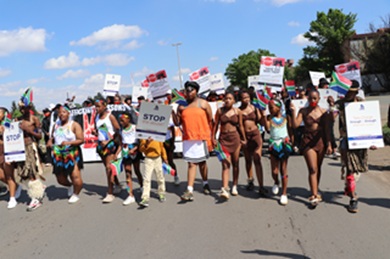
Gauteng Steps up Fight Against Human Trafficking as Survivors Urges Communities to Stay Alert in Boipatong
The Gauteng Department of Social Development has called on communities to remain vigilant against human trafficking and report suspected cases, as the province intensifies efforts to prevent human trafficking and protect vulnerable people. The call was made during the provincial trafficking in person awareness campaign held Boipatong, Sedibeng Region, where government and community partners raised awareness about how traffickers recruit and exploit victims, while providing communities with information available support services.
Trafficking in person often involves the recruitment, transportation or control of people for the purpose of exploitation. Traffickers often target vulnerable people through seemingly attractive opportunities including promises of employment, better income, travel or modelling opportunities. Social media and other digital platforms are increasingly being used to identify and groom potential victims. The Gauteng MEC for Social Development Nomantu Nkomo-Ralehoko said have an important role to play in preventing trafficking by recognizing the warning signs and reporting the suspected cases. “Human trafficking thrives in secrecy, and this is why an informed and vigilant community is one of our strongest lines of defense. We must ensure that our children, young people, women and other vulnerable members of the society understand that what may appear to be an opportunity can sometimes be a carefully planned trap”, said MEC Nkomo-Ralehoko.
The seriousness of trafficking was brought home by the testimony of a survivor Thabo Molote (not his real name), who shared experience of being recruited and taken to a foreign country after being promised a better employment opportunity. Molote said he was young and unemployed when he was approached with promises of better income and an opportunity to work oversees. I was young and unemployed and when they promise me that I will be working oversee and earn a better income, I was excited thinking that now I will take my family out of poverty”, he said Instead, he found himself under the control of traffickers and subjected to harsh conditions. “We were working 24 hours, not eating food that we are used to, and we guarded 24/7 with no communication to anyone back home”, added Molote.
He urged communities to protect one another and remain alert to suspicious recruitment offers. Also addressing residents, Capt Lefa Lebitso from the HAWKS was educating communities about how traffickers operate, the warning signs to look out for, and the importance of reporting suspected cases to the relevant authorities. “You can even be trafficked by a person that you know, a person that is close to your family”
He encouraged residents to remain vigilant, share information and work closely with the law enforcement and social development stakeholders to prevent trafficking and support victims and survivors. MEC Nkomo-Ralehoko said the Department’s response goes beyond awareness campaign and include prevention, protection, psychosocial support and partnerships with communities and civil society organisations “As the Department, we have a responsibility to reach vulnerable people before traffickers do. We must strengthen families and communities, support survivors and ensure that people know where to get help. Awareness must be accompanied by access to services and practical support’, said Nkomo-Ralehoko.
The Department urged communities to stay alert to warning signs such as suspicious employment opportunities, children or vulnerable people disappearing, and situations where an individual’s movement, identity document, money or communication are controlled by another person. Members of the public are encouraged not to confront suspected traffickers themselves, but to report their concerns to law enforcement agencies and seek assistance from relevant social development services.