City Tightens Clampdown on Illegal Informal Trading in Johannesburg’s Inner City
By Thembi Moyo
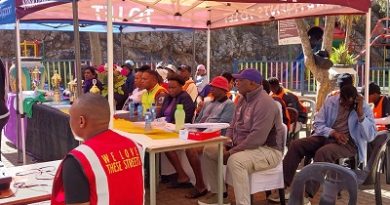
The City of Johannesburg has launched an intensified operation to verify informal traders in the Inner City, following a recent court order aimed at restoring order and legality to street trading. Acting Member of the Mayoral Committee (MMC) for Economic Development, Mlungisi Mabaso, led an oversight visit on Thursday, November 6, to monitor the verification process and ensure that the City complies with the court judgment.
Mabaso, who also serves as MMC for Human Settlements, was joined by the Acting Executive Mayor and the MMC for Development Planning. Both the Executive Mayor and the MMC for Economic Development are currently abroad on official City business, leaving Mabaso in charge of the operation.
Mabaso explained that the oversight visit was conducted in response to a court order requiring the City to verify all informal traders operating along De Villiers Street. He said the ruling reinforces the City’s ongoing clean-up campaigns and its efforts to ensure that all traders in Johannesburg operate legally and possess valid permits. He also raised concerns about reports that some South Africans with trading permits have been illegally subletting their stalls to foreign nationals, a practice that contravenes City regulations. Mabaso urged residents to stop the practice and verify themselves so they can operate their own businesses legally.
The verification process stems from a court judgment handed down earlier this week, which instructed the City to confirm the legality of informal traders in specific Inner City areas. The initiative forms part of a broader plan to clean up Johannesburg, address illegal trading, and improve safety and sanitation in the city’s most congested zones. Officials noted that the response from traders has been slow. Out of a court-identified list of 525 traders, only 71 had come forward for verification by Thursday morning. The Acting Executive Mayor said the low turnout suggests that many of the traders listed may be undocumented or do not meet the necessary requirements. To assist with the verification, officials from the Department of Home Affairs’ immigration unit have been brought in to verify identities and documentation.
During the oversight visit, Mabaso and his team also inspected shops and stalls in the area. They discovered that some traders who used to operate on the streets have now moved into nearby shops many without the required trading licenses. Mabaso emphasised that the City’s goal is to make Johannesburg clean, safe, and lawful, adding that informal trading must be regulated so that all businesses can operate fairly and residents can feel secure walking the streets.
The City plans to continue these operations over the coming weeks, with a major enforcement drive expected next week. This will include a high-impact service delivery programme to address blocked drains, waste build-up, and poor sanitation in the area. Mabaso acknowledged that the process will not be easy but reaffirmed the City’s commitment to restoring order in the Inner City and eventually replicating the model across Johannesburg. Informal traders have been urged to report to the GT Taxi Rank, where the official verification process is taking place. Those who fail to present themselves for verification, or who are found to be operating illegally, risk having their stalls removed. The City maintains that it will not stop until the Inner City is clean, lawful, and safe for all residents and traders.