China’s Zero-Tariff Policy Sparks Hope for African Trade Growth, but Experts Warn Industrialisation Is Key
By Thembi Moyo
South Africa 15 May 2026- China’s decision to introduce a zero-tariff policy for 53 African countries with diplomatic ties to Beijing is being hailed as a major opportunity for Africa’s economic growth, with diplomats, economists and academics saying the move could reshape trade relations and unlock new export markets across the continent.
The policy, which grants duty-free access for a wide range of African products entering the Chinese market, was the focus of discussions during a dialogue hosted by the Sino-SA Media Club, where speakers described the initiative as a significant step toward deepening China-Africa economic cooperation.
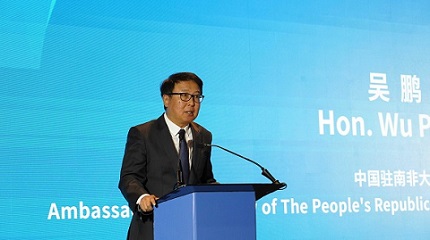
China’s Ambassador to South Africa, Wu Peng said the decision reflects China’s long-term commitment to Africa’s development and shared prosperity. “China is ready to leverage its huge market to provide long-term, stable and sustainable opportunities for Africa’s development,” Wu Peng said. “This is not short-term aid, but a partnership for shared growth and prosperity.”
He noted that China’s market of more than 400 million middle-income consumers presents enormous opportunities for African exporters, particularly South African companies looking to expand internationally. South Africa, one of Africa’s most industrialised economies and China’s largest trading partner on the continent, is expected to benefit significantly from the removal of tariffs.
Wu Peng identified agriculture, manufacturing and industrial cooperation as sectors likely to see rapid growth under the new arrangement. “With zero tariffs, more South African products will enter the Chinese market at lower costs, improving competitiveness and unlocking new growth opportunities,” he said. Products expected to benefit include citrus fruits, wine, nuts, tea and seafood. Wu Peng also revealed that South Africa and China recently signed a revised protocol on quarantine requirements for South African citrus exports, while talks continue on expanding exports of cherries and wild seafood products. “I believe we will hear more good news in the future,” he added. Experts at the dialogue said the timing of the policy is significant as global trade faces mounting pressure from protectionism, slowing economic growth and geopolitical tensions.
Professor Gabila F. Nubong of North-West University described the zero-tariff policy as a positive step toward balancing trade relations and strengthening Africa’s regional integration agenda under the African Continental Free Trade Area (AfCFTA). “This empowers cross-country cooperation in investment for export production to China,” Nubong said. “It also feeds into Africa’s own regional integration and trade agenda under the AfCFTA.”
He praised China’s commitment to improving customs procedures and trade facilitation measures, including the expansion of “green channels” aimed at speeding up inspections and reducing delays for African exports entering China. “Green lanes allow streamlined inspections, faster phytosanitary checks and priority processing at ports,” he explained.
According to figures shared during the discussion, China-Africa trade reached a record US$348 billion in 2025, reflecting year-on-year growth of 17.7%. China’s exports to Africa stood at US$225 billion, while imports from Africa reached US$123 billion, largely consisting of crude oil, copper, cobalt and other raw materials. Despite the impressive growth in trade, experts warned that African countries must avoid remaining dependent on exporting raw commodities.
Nubong cautioned that tariff reductions alone would not transform African economies unless countries invested in industrialisation and production capacity. “Zero tariffs on cocoa beans or unprocessed copper mean little if African countries are not producing value-added goods,” he said. “Market access only creates opportunity. Countries still need production capacity, industrial policy and regional cooperation.”
Economist Eliphas Ndou echoed similar concerns, saying the policy would not automatically eliminate the longstanding trade deficit between Africa and China.“The zero-tariff policy on South Africa and African exports to China will not eliminate the bilateral trade balance deficit,” Ndou said. “There will be some improvement in the short term, but the real solution lies in beneficiation and industrialisation.”
Ndou explained that Africa’s exports to China continue to be dominated by low-value raw materials and minerals, while China exports higher-value manufactured products to the continent. “This is due to the composition of trade,” he said. “African exports are mainly unprocessed raw materials, while China exports high-value manufactured products.”
He added that South Africa is better positioned than many African countries to take advantage of the policy because of its relatively advanced industrial base and established economic ties with China. South Africa and China formally established bilateral relations in 1998, and economic cooperation between the two countries has expanded rapidly over the years.
Ndou said South Africa already has several value-added products capable of competing in China, including processed foods, agricultural products and manufactured goods. However, he warned that structural challenges such as high electricity prices, logistics inefficiencies and transport delays continue to weaken South Africa’s competitiveness. “The price of electricity in South Africa is much higher, and that affects the competitiveness of locally manufactured products,” Ndou explained. “Transport and logistics challenges also increase costs and delay shipments.”
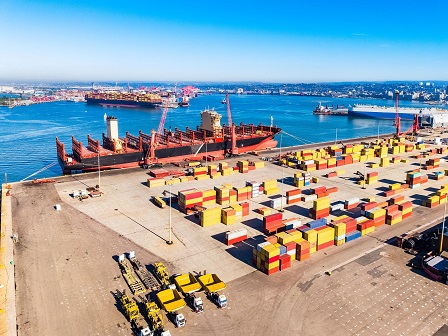
He stressed the importance of ongoing reforms at Transnet and improvements at Durban harbour to support exporters and reduce delays. “Transnet’s improvements at Durban harbour are extremely important because delays at ports can cause exporters to lose money and market opportunities,” he said. Ndou also noted that some recent growth in South African exports to China may partly reflect trade diversion from the United States due to tariffs and shifting global trade dynamics. “The future demand will still depend on Chinese consumer tastes and preferences,” he said.
Professor Yang Jun from the University of International Business and Economics said industries such as horticulture and wood processing could benefit immediately from the zero-tariff arrangement. Research presented during the dialogue estimated that South African exports of fruits, vegetables and related products to China could increase by more than 80%. “South African exporters will gain a significant price advantage,” Yang Jun said. “Output growth in the sector is expected to exceed 3%.”
He added that products such as Rooibos tea, flowers, spices and aloe-based goods also have strong growth potential in the Chinese market. According to Yang Jun, the removal of tariffs would help South African products enter China’s growing e-commerce platforms, retail chains and specialty supermarkets more easily. He encouraged South African businesses to expand into China’s rapidly growing second-tier cities, where demand for imported agricultural products is increasing quickly. “The zero-tariff policy is well aligned with the demand characteristics of these markets,” he said. Speakers also highlighted the importance of stronger people-to-people exchanges between China and South Africa, particularly among young people and universities. Ndou said educational partnerships and skills-sharing programmes would be crucial for long-term cooperation. “Knowledge and skills sharing are critical,” he said. “Mutual understanding can only be achieved through people-centred collaborations.”
Experts further argued that South Africa needs a far more aggressive strategy to market its products in China if local businesses hope to compete effectively. While Chinese products are now common in South African homes, roads and offices, South African brands remain relatively unknown to many Chinese consumers. “Brand recognition is critical,” Ndou said. “South Africa must invest in aggressive marketing campaigns in China if it wants to succeed in that market.”
He also warned that South African businesses may struggle to compete without stronger government support, particularly because many Chinese industries benefit from subsidies and industrial policy assistance. “The Chinese government subsidies many of its industries,” Ndou said. “South African businesses will find it difficult to compete without support through subsidies, financing and quality standards policies.”
Wu Peng said China remains committed to supporting open trade, multilateralism and long-term cooperation with Africa despite growing global economic uncertainty. “As long as businesses on both sides seize the opportunities and deepen cooperation, China-South Africa economic and trade relations will reach a new level,” he said.