
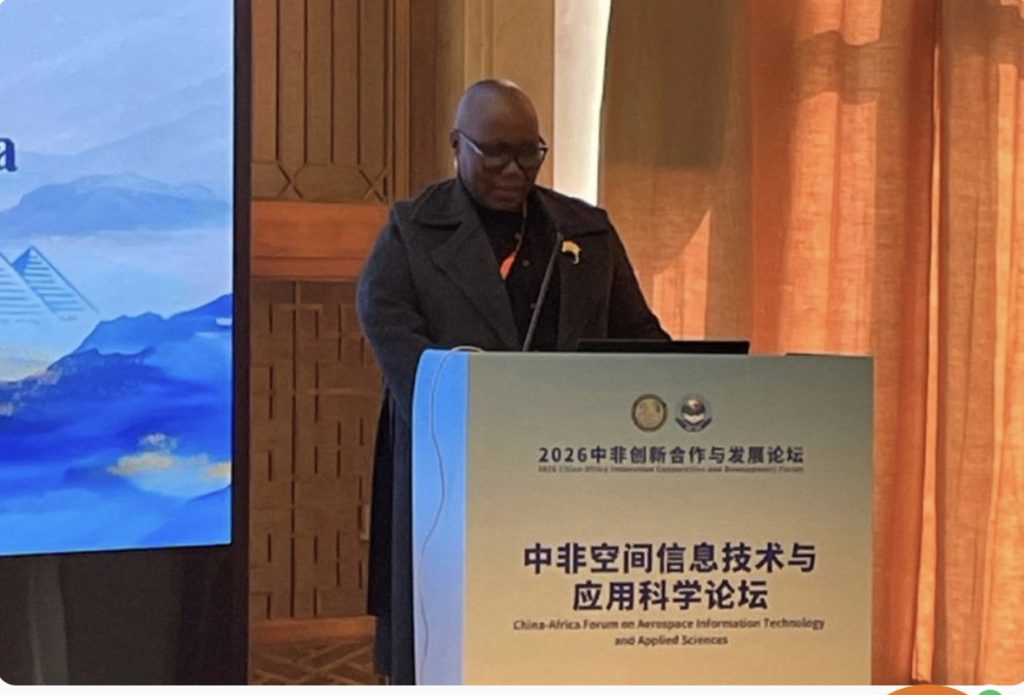
South Africa Pushes for Stronger China-Africa Space Science Partnership
Space technology is increasingly being viewed as an important tool in addressing some of Africa’s biggest development challenges, and South Africa wants to ensure that more African countries benefit from these innovations.
Deputy Minister of Science, Technology and Innovation Dr Nomalungelo Gina made the call for stronger cooperation between Africa and China during the 2026 China-Africa Innovation and Cooperation Development Forum in Wuhan, China. Speaking during a session on China-Africa Space Information Technology and Applied Science, Gina said satellite technology and other space-related innovations could help African countries improve agricultural production, manage water resources and respond better to environmental challenges.
She said stronger cooperation between the two sides would make these technologies more accessible and ensure that their benefits reached more communities across the continent. For countries facing the effects of climate change, space technology can provide valuable information to help farmers monitor crops, identify environmental changes and make informed decisions about natural resources.
Gina highlighted agriculture and food security, water management, climate change adaptation, environmental protection and coastal-resource monitoring as important areas where cooperation could make a difference.She also pointed to the establishment of the China-South Africa Belt and Road Joint Laboratory on Aerospace Information Technology and Applications in 2025 as an important step in strengthening scientific relations between the two countries.
The laboratory was developed through cooperation between the Aerospace Information Research Institute of the Chinese Academy of Sciences and the South African National Space Agency. Its work focuses on using satellite remote sensing, airborne platforms and other technologies to support precision agriculture, natural-resource monitoring and environmental protection.
The partnership has also made progress in navigation technology, disaster management and agricultural applications, while creating opportunities for young scientists to participate in research and exchange programmes. Gina said the laboratory provided a practical foundation for countries to work together on research, develop new technologies and find solutions that respond to their development needs.
She stressed that Africa should not only benefit from technologies developed elsewhere but should also play an active role in research, innovation and the development of local scientific expertise. “We must create more opportunities for African scientists and young researchers, enabling African countries to develop and apply technologies in line with their own priorities,” she said.
She added that cooperation should go beyond transferring technology and focus on joint innovation, knowledge sharing and building sustainable scientific capabilities within African countries. The four-day forum, held from 10 to 13 November at the Donghu International Convention Centre, brought together representatives and experts from several African countries and China to explore opportunities for scientific and technological cooperation.
Discussions covered a range of areas, including artificial intelligence, health and medical technology, forestry, training, intelligent transportation and green technologies. South Africa, Zimbabwe, Ethiopia and Egypt shared their perspectives on how space science could support development across Africa. Ethiopia, for example, highlighted the potential use of space technology in managing water resources and protecting the environment in the Blue Nile Basin.
The discussions also explored future cooperation in disaster management, marine and coastal monitoring, agriculture and environmental observation. For Africa, the growing partnership presents an opportunity to use scientific innovation to address practical problems while developing the skills and infrastructure needed to support long-term development.


