SA Citrus Exports Get Major Boost with New China Trade Agreement
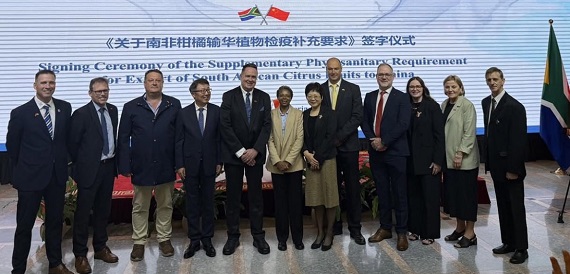
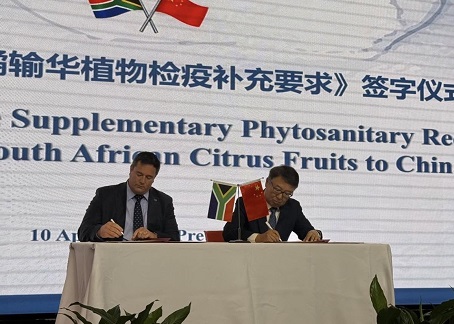
Pretoria 10 April 2025 – A fresh chapter in agricultural trade between South Africa and China unfolded in Pretoria, as officials from both nations signed a new supplementary phytosanitary agreement set to expand citrus exports and unlock new economic opportunities. The agreement, signed at the Embassy of the People’s Republic of China in Pretoria, is being hailed as a significant step forward for South Africa’s citrus industry one of the country’s most valuable agricultural sectors and a major employer in rural communities.
Chinese Ambassador Wu Peng and South Africa’s Minister of Agriculture John Steenhuisen presided over the ceremony, underscoring the growing importance of agricultural trade in strengthening bilateral relations. At its core, the supplementary phytosanitary agreement focuses on plant health standards and export protocols critical requirements that ensure South African citrus meets China’s strict import regulations. By refining and expanding these measures, the deal is expected to smooth export processes, reduce delays at ports of entry, and open the door for increased volumes of citrus to reach Chinese markets.
For South African growers, the implications are immediate and practical. China is already one of the fastest-growing destinations for the country’s citrus exports, and improved access could translate into higher demand, better prices, and greater market stability. Industry experts say this comes at a crucial time, as producers navigate rising input costs, logistical challenges, and fluctuating global demand. Speaking at the event, Steenhuisen highlighted the agreement as more than just a technical update. He described it as a “gateway for growth,” noting that expanded access to China’s vast consumer market has the potential to uplift farming communities and stimulate job creation across the agricultural value chain from orchards and packhouses to transport and export logistics.
Ambassador Wu Peng echoed these sentiments, pointing to the deepening economic partnership between the two countries. He emphasised that China remains committed to importing high-quality agricultural products from South Africa, and that citrus known for its quality and flavour continues to enjoy strong demand among Chinese consumers. The broader Agri-economy also stands to benefit. Increased citrus exports can boost foreign exchange earnings, support rural livelihoods, and reinforce South Africa’s position as a competitive player in global agriculture. The deal further aligns with ongoing efforts to diversify export markets and reduce reliance on traditional trading partners.
Beyond economics, the agreement reflects a strengthening diplomatic relationship between Pretoria and Beijing. Agricultural cooperation has increasingly become a cornerstone of engagement, with both countries seeking mutually beneficial ways to enhance food security, trade efficiency, and technological exchange. As the ceremony concluded, optimism was evident among stakeholders in attendance. While the full impact of the agreement will unfold over time, there is a shared expectation that it will bring tangible gains not only for farmers and exporters, but for the broader economy. With global competition intensifying, today’s signing signals that South Africa is actively positioning itself to secure and expand its foothold in key international markets one citrus shipment at a time.