
Illicit Trade Bleeds Billions from South Africa’s Economy, New Study Finds
By Thembi Moyo
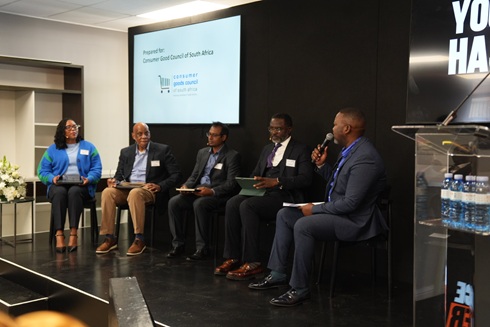
South Africa’s illicit economy is costing the country billions of rands in lost tax revenue, jobs and formal economic activity, according to a new study by Econometrix.The findings were presented at a media briefing hosted by the Consumer Goods Council of South Africa (CGCSA), where business leaders, economists and other stakeholders gathered to examine the growing impact of illicit trade on the country.
The report estimates that South Africa’s illicit economy could be worth about R280 billion, resulting in as much as R68 billion in lost tax revenue every year. The illegal market is also estimated to displace around R193 billion in formal production and 87,500 direct jobs.Economist Dr Azar Jammine, who presented the study’s findings and methodology, warned that the consequences extend far beyond the businesses directly affected by illegal trading.
When government loses billions in tax revenue, the impact is ultimately felt by ordinary South Africans through reduced resources for public services and increased pressure on government finances.Jammine explained that the loss of revenue also means government has to borrow more to meet its obligations, creating additional costs for the country.The study examined illicit activity across 12 industries, highlighting the scale and diversity of South Africa’s illegal economy. Among the sectors identified were mining, gambling, tobacco, alcohol, food, clothing and toys.
Illegal mining, particularly the activities associated with zama zama operations, was identified as one of the largest illicit markets, estimated at around R60 billion. Gambling followed at approximately R55 billion, while illicit tobacco was estimated at R45 billion.Tobacco was found to have the largest impact on lost tax revenue, with an estimated R31.5 billion lost annually.The alcohol sector was also highlighted, with illicit trade estimated to cost government up to R17 billion in lost tax revenue.
The presentation formed part of a wider campaign by the CGCSA to draw public attention to the consequences of buying and selling illicit and counterfeit products.The event opened with remarks by master of ceremonies Bongani Bingwa, followed by an introduction to the report by Neo Momodu, CGCSA Executive for Legal, Regulatory and Stakeholder Engagement.Heineken Beverages Managing Director Jordi Borrut delivered a message of support, emphasising the importance of cooperation between government and business in confronting the illicit economy.
The event also included the screening of The Reckoning, an investigative video highlighting the real-world consequences of illicit trade.For consumers, the issue is not simply about whether a product is cheaper. Illicit goods can bypass the safety, quality and regulatory checks required of legitimate products, creating potential risks to consumers while also undermining businesses that comply with the law.The CGCSA has increasingly called for stronger cooperation between government, law enforcement, businesses and communities to disrupt the networks behind illicit trading.
The organisation has previously warned that illicit trade affects a wide range of industries, including alcohol, cigarettes, pharmaceuticals, food and clothing, while robbing the state of revenue and placing consumers at risk.The report comes at a time when South Africa is under growing pressure to strengthen its fight against organised crime and protect legitimate businesses. Government has also identified illicit trade as a threat to economic growth, consumer safety and revenue collection.
The message emerging from the discussion was clear: the illicit economy is not a victimless market.Behind the billions of rands lost are businesses struggling to compete, jobs that may never be created, government revenue that could have funded public services and consumers who may unknowingly purchase unsafe products.As South Africa searches for ways to grow the economy and create employment, the fight against illicit trade is increasingly being seen as part of the broader battle to protect the formal economy and the livelihoods that depend on it.


