China Calls for Deeper Global Partnerships at Second China Railway Express Cooperation Forum
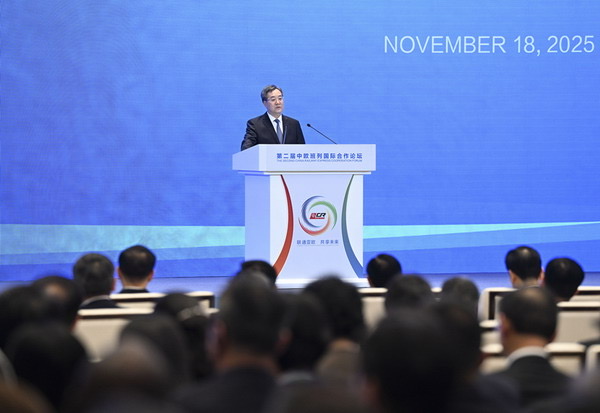
The Second China Railway Express Cooperation Forum opened on 18 November 2025 in Xi’an, Shaanxi Province, bringing together nearly 450 delegates from government, business, academia and international organisations. The high-level gathering reaffirmed the strategic role of the China Railway Express in strengthening connectivity across Asia and Europe. Ding Xuexiang, Member of the Standing Committee of the Political Bureau of the Communist Party of China (CPC) Central Committee and Vice Premier of the State Council, attended the opening ceremony and delivered keynote remarks that set the tone for the forum.
In his address, Ding underscored China’s commitment to advancing the development of the China Railway Express, a central component of the Belt and Road Initiative. He quoted President Xi Jinping, who has repeatedly emphasised the need for the railway network to offer services that are efficient, economical and secure. Over the past decade, the China Railway Express has grown from an ambitious idea into a robust international logistics lifeline, widely recognised as a “steel camel caravan” traversing the Silk Road Economic Belt. Its rapid growth and widening footprint have solidified its reputation as a reliable channel for trade, investment and cultural exchange.
Ding highlighted that the recently concluded fourth plenary session of the 20th CPC Central Committee laid out China’s development blueprint for the next five years. The plan includes major pathways for strengthening the China Railway Express as a global logistics artery. He stressed that China stands ready to work with all partners to uphold the spirit of the ancient Silk Road mutual benefit, openness and cooperation while deepening ties that connect economies and societies across continents.
He outlined four key proposals to guide future cooperation.
First, Ding emphasised the need for enhanced openness and connectivity, calling for deeper alignment of infrastructure, regulations and transport standards across borders. Coordination among railway, highway, maritime and other transport modes should be intensified to maximise the strengths of diversified trade corridors.
Second, he called for strengthened collaboration and innovation, urging participating countries to accelerate the digitalisation and intelligent upgrading of the China Railway Express. Applying advanced technologies, he noted, will improve efficiency, sustainability and the long-term competitiveness of the network.
Third, Ding stressed the importance of robust risk prevention and control. This includes improving joint law-enforcement mechanisms, expanding information-sharing systems and ensuring a secure environment for logistics, trade and investment.
Fourth, he encouraged deeper industrial integration along the route, supporting enterprises to engage in broader and more coordinated cooperation. By stabilising supply chains and promoting smooth logistics, countries can stimulate trade, foster industrial upgrading and drive shared regional prosperity.
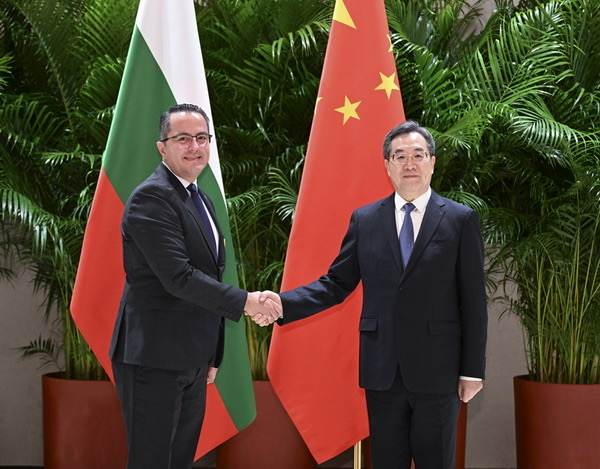
The opening ceremony was also attended by Tsoncho Tomov Ganev, Vice President of the National Assembly of Bulgaria, who delivered remarks reflecting Bulgaria’s support for stronger Eurasian connectivity. After the ceremony, Ding met with Ganev for discussions on China–Bulgaria relations and expanding practical cooperation.
During the forum, Ding toured the “Review of Operation of China Railway Express” exhibition, which showcased the network’s milestones, successes and innovations.
Held under the theme “Connecting Asia and Europe for a Shared Future,” this year’s forum reinforced the importance of partnerships in shaping a more interconnected global economy.